Camp Lejeune claims: what veterans and families should know.
The Camp Lejeune Justice Act reopened a door that had been closed for decades. Here is what that means for you.
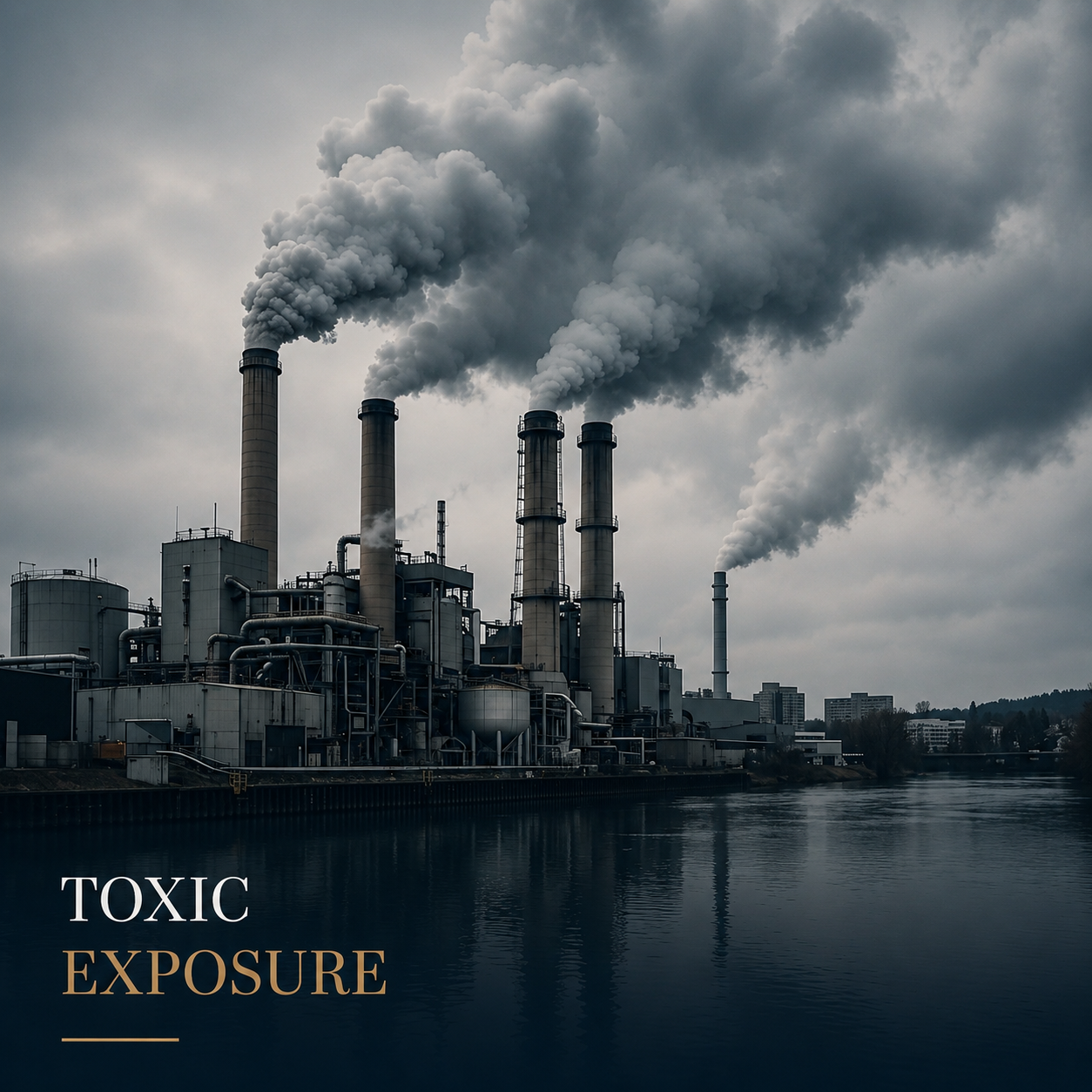
For more than thirty years, service members, their families, and civilian workers stationed at Camp Lejeune drank, cooked with, and bathed in water contaminated with industrial solvents. Many later developed serious illnesses. Until recently, most had no meaningful path to accountability.
The Camp Lejeune Justice Act of 2022 changed that.
Who is eligible
You may qualify if you meet all three:
- You lived, worked, or were otherwise present at Camp Lejeune for at least 30 days between August 1, 1953 and December 31, 1987.
- You developed a qualifying illness — including several cancers, Parkinson's disease, kidney or liver disease, and multiple myeloma, among others.
- You were not dishonorably discharged.
Eligibility extends to spouses, children (including in-utero exposure), and civilian workers — not only service members.
What the process actually looks like
Every claim first goes through an administrative filing with the Department of the Navy. If that filing is not resolved within six months, the case can be filed in the Eastern District of North Carolina. Our office handles both phases.
The most important thing you can do today is preserve your records — service records, base assignments, medical files. We will help you gather what you don't have.
Timing matters
The window for new CLJA filings is finite. Waiting is not neutral: witnesses move, memories fade, and eligibility can change with new legislation. If you or a family member fits the criteria, a short call to confirm makes sense.
No fee unless we recover
Every Camp Lejeune matter we handle is on a contingency basis. You pay nothing unless we obtain a recovery for you.
Related practice area
Toxic Exposure
Related reading
Keep exploring.
Roundup and non-Hodgkin lymphoma: where the litigation stands.
Years after the first verdicts, the case pipeline is still open — with important California-specific considerations.
How to know if you have a product liability case in California.
The four questions we ask every caller — and how the answers shape what happens next.
California wildfire claims: when a utility caused the fire.
Insurance rarely covers the full loss. Here is how utility-caused wildfire litigation fills the gap.
Have questions about your situation?
A short call is often enough —
and it's always free.
Tell us what happened. We will listen carefully, tell you plainly what we can and cannot do, and — if we can help — begin quietly, right away.