California wildfire claims: when a utility caused the fire.
Insurance rarely covers the full loss. Here is how utility-caused wildfire litigation fills the gap.
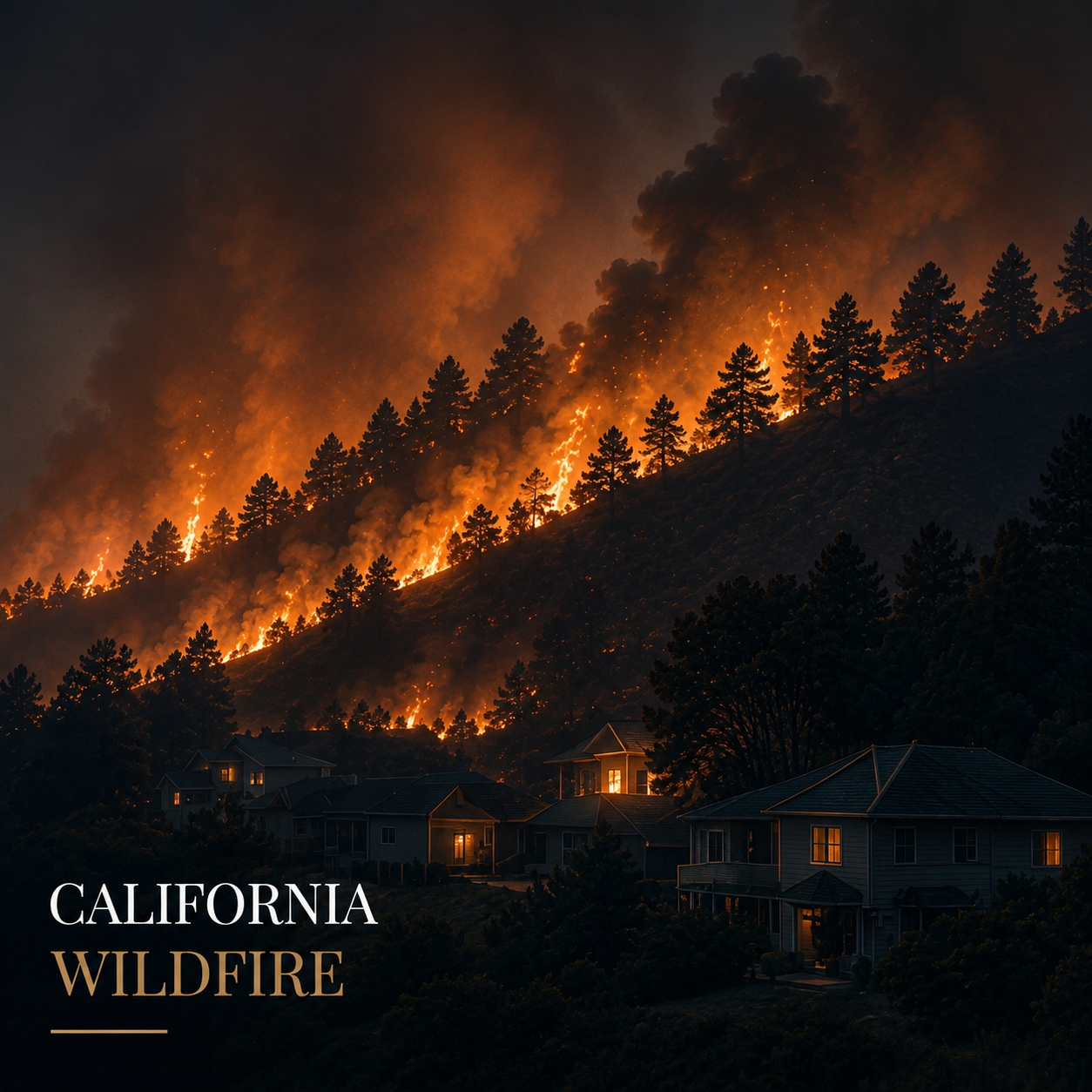
California's largest wildfires of the past decade share a common thread — many were sparked not by lightning or arson, but by aging utility equipment. State investigators have repeatedly traced ignitions to failing conductors, unmaintained vegetation, and outdated hardware. When that happens, the utility is legally responsible for the damage the fire caused.
Why insurance alone often isn't enough
Homeowners policies were written for a different California. They cap dwelling coverage, exclude landscaping, and settle personal-property claims at depreciated value. After a total loss, many families discover their policy pays a fraction of what it costs to rebuild — even before considering displacement, business interruption, and the emotional toll.
Utility litigation is designed to close that gap.
What "inverse condemnation" means for you
California courts apply inverse condemnation to utility-caused fires. In plain language: because utilities operate for public benefit, they are liable for property damage their equipment causes — even without proof of negligence. That legal principle has driven the largest wildfire recoveries in state history.
What we recover for
- Full replacement value of the home and outbuildings
- Personal property beyond insurance caps
- Landscaping, orchards, livestock, vehicles
- Loss of use during displacement
- Business income loss and diminution in value
- Emotional distress and, where applicable, personal injury
Time limits
California's statute of limitations for wildfire property damage is generally three years — but earlier deadlines can apply in individual cases. If you were affected by a fire and are unsure whether a utility was involved, a short call gives you a straight answer.
Related practice area
California Wildfire
Related reading
Keep exploring.
How to know if you have a product liability case in California.
The four questions we ask every caller — and how the answers shape what happens next.
Camp Lejeune claims: what veterans and families should know.
The Camp Lejeune Justice Act reopened a door that had been closed for decades. Here is what that means for you.
Hernia mesh: what to do after revision surgery.
If your mesh failed and required a second operation, three steps in the first weeks matter most.
Have questions about your situation?
A short call is often enough —
and it's always free.
Tell us what happened. We will listen carefully, tell you plainly what we can and cannot do, and — if we can help — begin quietly, right away.