The California wildfire recovery guide.
A start-to-finish walkthrough of what to do in the weeks and months after losing property to a wildfire — from insurance to litigation.
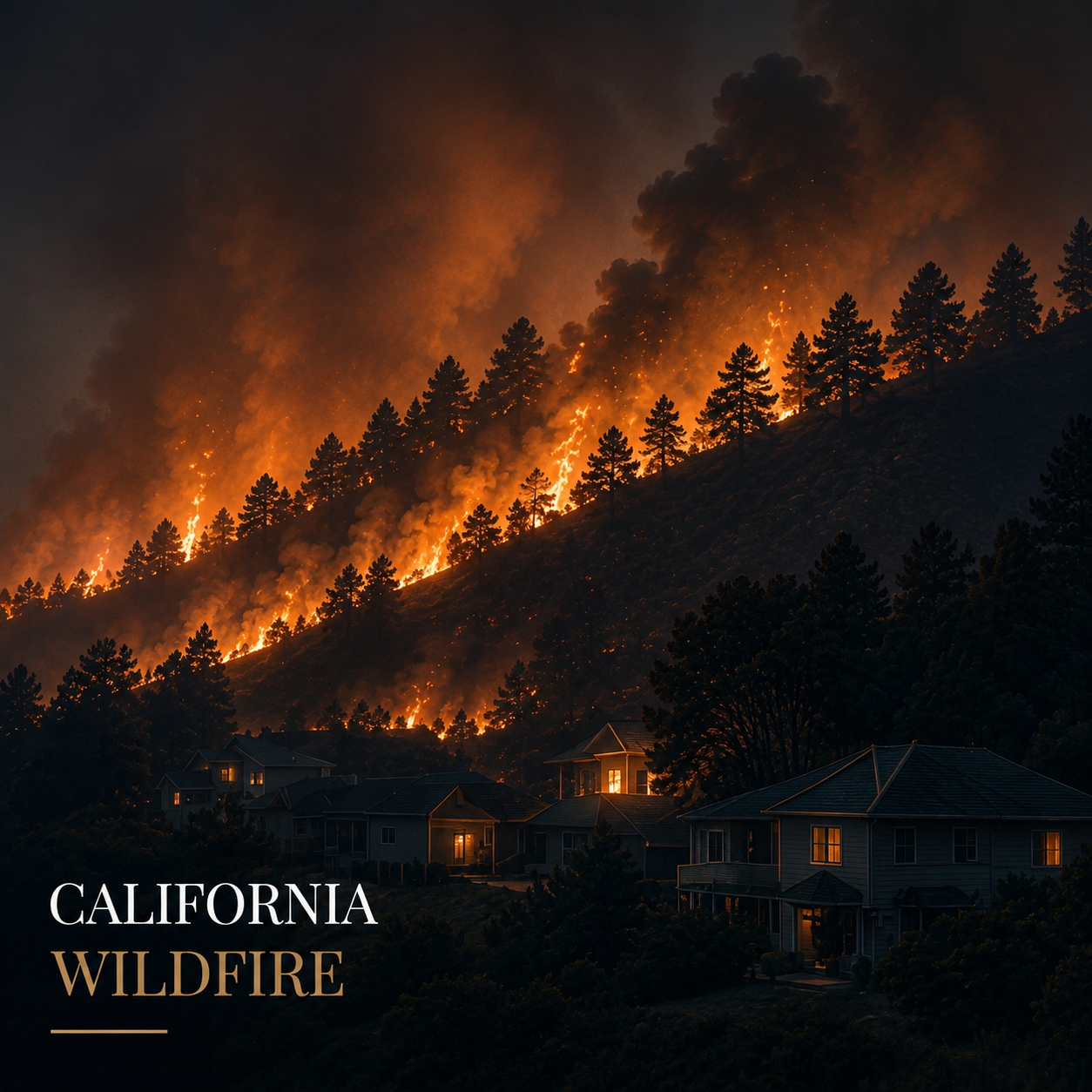
Chapter 01
The first 72 hours
Safety first. Do not re-enter the property until fire authorities clear the area — even a structure that looks intact can hide toxic ash, gas leaks, and structural failure.
Once safety is confirmed, three things matter:
- Notify your insurer and open a claim. Ask for your policy in full and for an Advance Living Expense (ALE) check the same day if you are displaced.
- Photograph everything before touching it. Every angle, inside and out. These photos are the foundation of every later claim.
- Save receipts for every dollar spent after the fire — clothing, medications, pet care, hotel, meals. Most of it is reimbursable.
Chapter 02
Weeks one to four: insurance
Your insurer will assign an adjuster. You are entitled to:
- A certified copy of your full policy — not the declaration page.
- Advance payments for personal property (typically 25%–75% of the personal-property limit) without a full inventory.
- Extended ALE covering additional living expenses during rebuilding.
Do not sign a proof of loss or accept a settlement in the first month. The full extent of your loss is rarely visible that quickly.
If your insurer denies coverage, delays without reason, or lowballs the estimate, California has strong bad-faith remedies. Document every communication.
Chapter 03
Investigation and cause
Within days to weeks of a major fire, Cal Fire and often federal investigators identify a likely cause. When that cause is utility equipment — failed conductors, unmaintained vegetation contact, aging hardware — a separate legal path opens up.
Utility-caused wildfire recoveries in California often exceed insurance settlements by significant multiples because of the inverse condemnation doctrine.
Chapter 04
Building your loss claim
Your loss has three main components:
- Structure — full replacement cost of the home and outbuildings.
- Contents — personal property, valued at replacement cost when your policy provides it.
- Additional damages — landscaping, orchards, vehicles, business income, emotional distress.
A contents inventory is tedious but essential. Room by room, item by item. If a professional inventory service is available, use one — the cost is usually reimbursable.
Chapter 05
When to bring in an attorney
If your fire was utility-caused, or if your insurer is not paying fairly, bring counsel in early. Attorneys' fees in wildfire matters are almost always contingency — you pay nothing unless we recover — and early involvement often affects the ultimate outcome.
There is no obligation in a first conversation.
Related practice area
California Wildfire
More guides
Keep going.
Medical Devices
Injured by a medical device: what to preserve.
The evidence that determines a medical-device case is usually collected in the first month. Here is what to save, in what order.
Hiring an attorney
Hiring a personal-injury attorney in California: what to actually ask.
Not a checklist of platitudes. The specific questions that surface how a firm actually works.
Ready to move forward?
The first call is —
always free.
Tell us what happened. We will listen carefully, tell you plainly what we can and cannot do, and — if we can help — begin quietly, right away.